

Why You Should Rotate Your Houseplants?
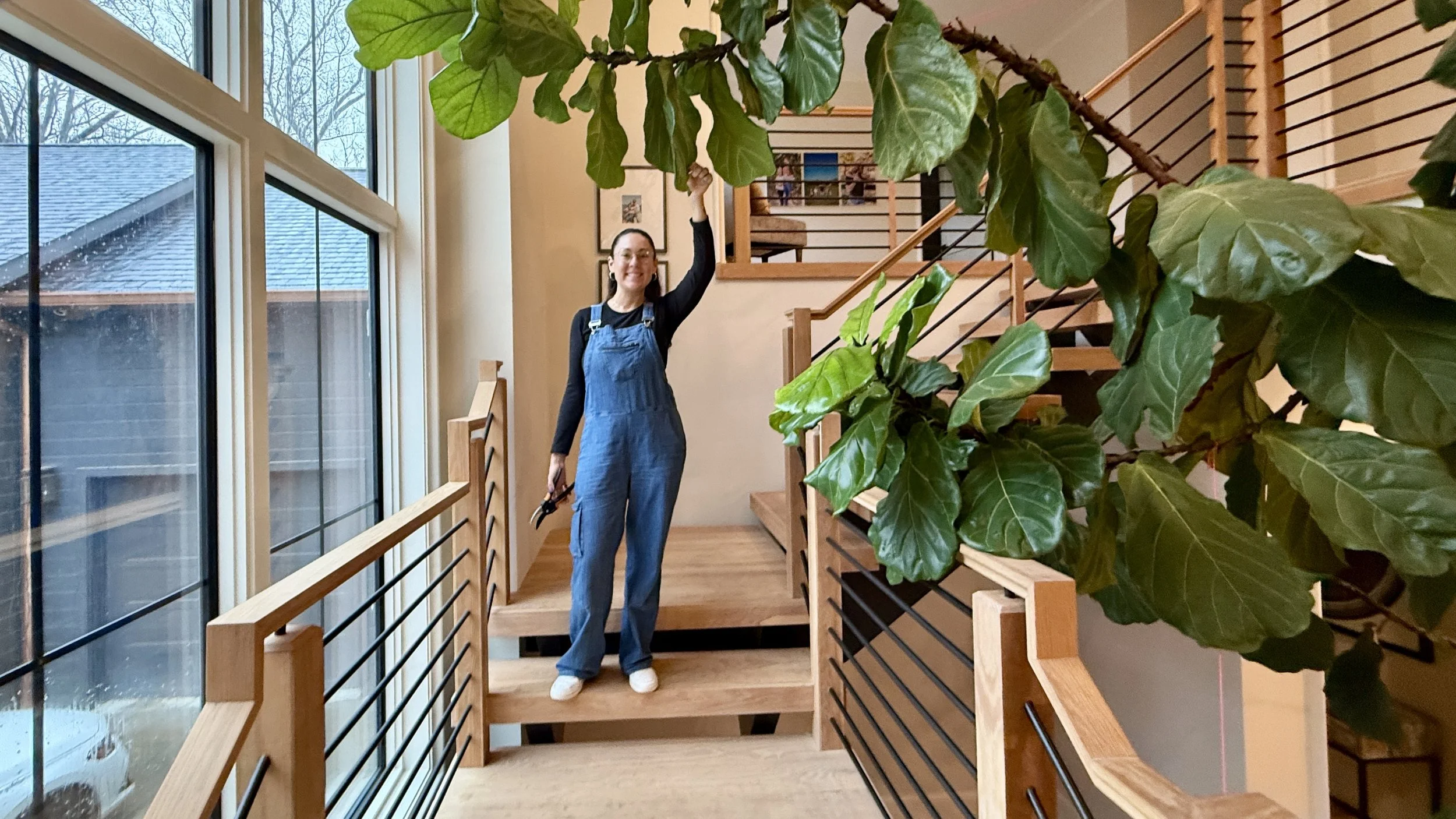
I’m Veronica, your houseplant coach, and today I want to talk about something simple that can completely change the way your indoor plants grow. We’re talking about rotating your houseplants.
If you’ve ever noticed your plant leaning toward the window or looking uneven, there’s a reason for that. Indoor plants naturally grow toward the light, and this process is called phototropism. When a plant sits near a window, it will begin bending toward the light source. Over time, this can cause uneven growth because the leaves and stems stretch in one direction.
But what’s happening inside the plant?
Plants produce growth hormones called auxins. When light hits one side of the plant, these hormones shift to the shaded side. The shaded side stretches and elongates, which causes the plant to bend toward the light. It’s not a problem. It’s survival. However, if we don’t rotate our indoor plants regularly, they can start to look lopsided, stretched, or unbalanced.
Rotating your houseplants helps prevent uneven growth and encourages a stronger, more symmetrical shape. When all sides of the plant receive equal light over time, growth becomes fuller and more balanced. Even if your plant is not in direct sunlight, indirect light from a window is enough to trigger phototropism. That’s why rotating indoor plants is important in almost every lighting situation.
So how often should you rotate your plants?
A good rule of thumb is every 2 to 4 weeks. If your plant is in bright direct sunlight, rotate it every 2 weeks. If it’s in medium or indirect light, every 3 to 4 weeks is usually enough. If you’re using a grow light that isn’t centered directly above the plant, rotate occasionally to keep growth balanced.
An easy habit is to rotate your plant when you water it. That way you won’t forget.
If you’re unsure whether your plant needs rotating, look for these signs:
Stems bending toward the window
One side looking fuller than the other
Leaves that are smaller on the darker side
A plant that looks uneven or slightly tilted
If your plant looks like it’s trying to crawl toward the window, it’s probably asking for a turn.
Rotating a houseplant is simple. Just give the pot a quarter turn. For larger plants, you may need a little help to safely move them, and always lift from the base of the pot rather than the stems.
Rotating your houseplants is one of the easiest plant care habits you can build. It supports healthier indoor plant growth, prevents leaning, and helps your plant maintain a beautiful shape over time. Your plant isn’t being dramatic. It’s just reaching for what it needs.
And if your plant continues leaning even after consistent rotation, it may not just be a rotation issue. It could be a lighting placement issue. That’s something we evaluate during a plant care session to help your plants grow with confidence.